

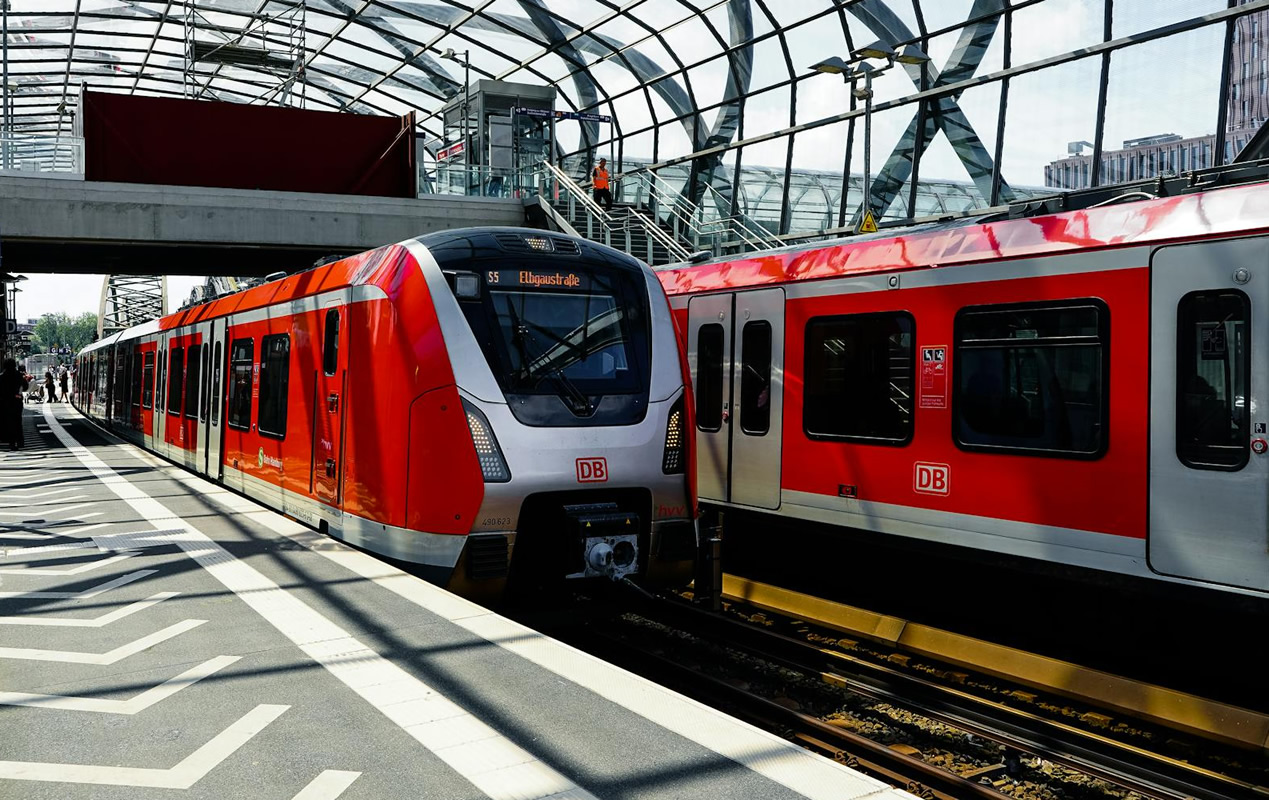
Modern trains are often celebrated for their speed, comfort, and digital sophistication—but behind the scenes lies a network of components that quietly keep everything running. Among the most critical (yet often overlooked) are inter-car electrical connectors: the systems that allow individual carriages to function as one seamless, intelligent unit.
Without these connectors, a train would not operate as a unified system. Instead, it would behave as a series of isolated vehicles with no shared power, control, or communication.
What Are Inter-Car Connectors?
Inter-car connectors are the physical and electrical links that bridge adjacent rail vehicles. They are supplied by specialists in these types of electrical connectors, such as LPA Group. The connectors provide the pathways through which electrical power, control signals, and increasingly, high-speed data are transmitted along the length of a train.
In practical terms, they are the interfaces that allow multiple carriages to behave as one. Whether in a metro unit, a high-speed train, or a freight consist, these connectors ensure continuity between vehicles, enabling coordinated operation from end to end.
They can take several forms, including flexible jumper cables, plug-and-socket assemblies, or integrated connections built directly into automatic couplers. Regardless of form, their purpose remains the same: to maintain uninterrupted electrical and data flow across moving, vibrating, and frequently coupled systems.
How Train Carriages Communicate Electrically
A modern train is best understood as a distributed system. Each carriage contains its own equipment—lighting, HVAC, doors, passenger information systems, sensors—and all of these subsystems must operate in harmony. Inter-car connectors make this coordination possible.
Power Distribution Across the Train
Electrical power is typically generated or supplied centrally and distributed throughout the train via inter-car connections. This may include auxiliary power for lighting, heating, and onboard systems.
As power travels between vehicles, each carriage steps it down or conditions it as required for its own equipment. The connectors must therefore handle not only significant electrical loads but also maintain consistent performance despite mechanical stress and environmental exposure. Reliable power transmission ensures that every carriage receives stable energy, regardless of its position in the train.
Control Signals: The Operational Backbone
Beyond power, inter-car connectors carry the control signals that govern train operation. Commands for door systems, braking, lighting, and onboard announcements all pass through these links.
This allows a single driver or control system to manage the entire train simultaneously. When a door command is issued, for example, it must be received and executed consistently across all carriages. The same applies to safety-critical systems such as braking or emergency lighting.
Because of this, control circuits are designed with high reliability and often include redundancy. Any interruption in these signals could affect safety or service continuity, making robust connector design essential.
Data Communication and Digital Networks
As rail technology has evolved, so too has the role of inter-car connectors. Modern trains rely heavily on data networks that span the entire consist.
These networks support a wide range of functions, from passenger Wi-Fi and infotainment systems to CCTV, diagnostics, and real-time monitoring. High-speed Ethernet and other communication protocols now run between carriages, transforming trains into connected, data-driven environments.
This shift has placed new demands on connectors. They must now handle not only electrical power and low-voltage control signals, but also high-bandwidth data transmission with minimal interference or loss.
Types of Inter-Car Connectors
The design of inter-car connectors varies depending on their function and the environment in which they operate. While the underlying goal is always reliable transmission, different applications require different approaches.
Inter-Car Jumper Systems
One of the most recognisable forms of inter-car connection is the jumper cable. These flexible cables physically link adjacent vehicles and are commonly used for control signals and low-voltage circuits.
They are designed to be robust yet easy to connect and disconnect, accommodating the regular coupling and uncoupling of train sets. Their flexibility allows them to absorb movement between carriages while maintaining a secure electrical connection.
High-Power Connectors
For applications involving significant electrical loads, dedicated high-power connectors are used. These are engineered to carry substantial currents required for systems such as heating, air conditioning, and auxiliary power distribution.
Such connectors must perform reliably under demanding conditions. They are exposed to vibration, temperature fluctuations, moisture, and contaminants, all while maintaining consistent electrical performance. As a result, they are typically constructed from durable materials and incorporate features such as secure locking mechanisms and environmental sealing.
Data and Communication Connectors
With the rise of digital rail systems, specialised connectors have been developed to support data transmission. These include ruggedised versions of common industrial connectors, adapted for the harsh rail environment.
They are designed to maintain signal integrity even in the presence of vibration and electromagnetic interference. This is particularly important for applications such as real-time diagnostics and passenger information systems, where data accuracy and speed are critical.
Modular and Hybrid Connectors
An increasingly popular approach is the use of modular or hybrid connectors, which combine multiple functions into a single interface. Rather than using separate connections for power, control, and data, these systems integrate them into one compact unit.
This reduces the number of physical connections between carriages, simplifies installation and maintenance, and can improve overall reliability. It also allows for more efficient use of space, which is particularly valuable in modern train designs.
Integrated Coupler Connections
In more advanced systems, electrical connections are integrated directly into the mechanical coupler. When two carriages are joined, their electrical and sometimes pneumatic connections are made automatically.
This approach supports faster train assembly and reduces the need for manual intervention. It also plays a key role in emerging technologies such as digital automatic coupling, where continuous data and power links are established across entire trains without manual connection.
Why Reliability Is Critical
Inter-car connectors operate in one of the harshest environments in engineering. They must endure constant vibration, mechanical movement, and exposure to the elements, all while maintaining flawless performance.
Failures in these systems can have significant consequences. A loss of connection may disrupt communication between carriages, affect door operation, or disable passenger information systems. In more serious cases, it could impact safety-critical functions.
To mitigate these risks, connectors are designed with durability and resilience in mind. This includes the use of high-quality materials, secure locking systems, and protective sealing against environmental factors. In many cases, redundancy is also built into the system to ensure continued operation even if one connection fails.
The Bigger Picture: Enabling Modern Rail Innovation
As trains become more advanced, the importance of inter-car connectors continues to grow. They are no longer just conduits for power and basic control signals; they are now integral to the digital infrastructure of modern rail.
From enabling predictive maintenance through real-time diagnostics to supporting passenger connectivity and smart energy management, these connectors underpin many of the innovations shaping the future of rail transport.
They also play a crucial role in automation, where reliable data exchange between vehicles is essential for coordinated operation.
Final Thoughts
Inter-car connectors may not be visible to passengers, but they are fundamental to the way trains operate. They ensure that power is distributed effectively, control systems remain synchronised, and data flows seamlessly across the entire train.
In doing so, they transform individual carriages into a single, cohesive system capable of delivering safe, efficient, and modern rail transport.
These components may be small in scale, but their impact is immense—making them true unsung heroes of rail engineering.
